The drone industry has evolved rapidly over the past decade, moving far beyond basic aerial photography and recreational flying. One of the most exciting advancements is the integration of virtual reality technology into drone operations. The emergence of the Best VR Drones has transformed how pilots interact with their aircraft, creating an immersive flying experience that closely resembles being inside the drone itself.
Unlike traditional drones that rely on smartphone screens or handheld controllers for navigation, VR-enabled drones allow users to view real-time footage through specialized headsets. This creates a first-person perspective that enhances situational awareness, precision, and engagement during flight.
As virtual reality continues to advance, drone manufacturers are introducing innovative features that improve image quality, reduce latency, and enhance flight performance. Whether used for professional aerial photography, industrial inspections, filmmaking, or recreational exploration, VR drone technology is redefining the possibilities of unmanned aerial systems.
This article explores what VR drones are, how they work, their benefits, industry applications, and the key factors to consider when selecting the right solution for your needs.
What Are VR Drones?
VR drones combine traditional drone technology with virtual reality systems to provide an immersive first-person flying experience. A Virtual Reality Drone streams live video from an onboard camera directly to a VR headset, allowing operators to see exactly what the drone sees in real time.
This setup creates the sensation of being airborne, offering a more engaging and realistic experience than viewing footage on a smartphone or tablet screen.
Most VR drones rely on First-Person View (FPV) technology. The onboard camera captures live visuals and transmits them wirelessly to a headset, where pilots can monitor flight conditions, navigate obstacles, and capture footage from unique perspectives.
Modern systems often include:
- HD or 4K video transmission
- Low-latency streaming
- Head-tracking functionality
- Intelligent flight modes
- Obstacle avoidance systems
- GPS-assisted navigation
The integration of VR and drone technologies has significantly improved user engagement while expanding professional use cases across multiple industries.
How VR Technology Changes Drone Flying
Virtual reality introduces a completely new dimension to drone operation. Traditional drone piloting requires users to split attention between the aircraft and a display screen. VR technology removes this barrier by placing pilots directly into the visual environment.
Enhanced Spatial Awareness
When flying through a headset, pilots gain a better understanding of distances, terrain, and obstacles. This increased spatial awareness improves navigation accuracy and flight confidence.
Real-Time Immersion
A Drone with VR Headset creates a cockpit-like experience. Operators can observe landscapes, structures, and environments from the drone’s perspective without distractions.
Improved Precision
Many professional operators find VR-assisted flying beneficial when performing detailed inspections, mapping projects, and cinematic filming where precise movements are essential.
Greater Engagement
For recreational users, flying becomes significantly more enjoyable. The sensation of soaring over landscapes provides an experience that closely resembles piloting an aircraft.
As VR hardware continues to improve, future drone systems are expected to offer even more realistic visual experiences with lower latency and enhanced image quality.
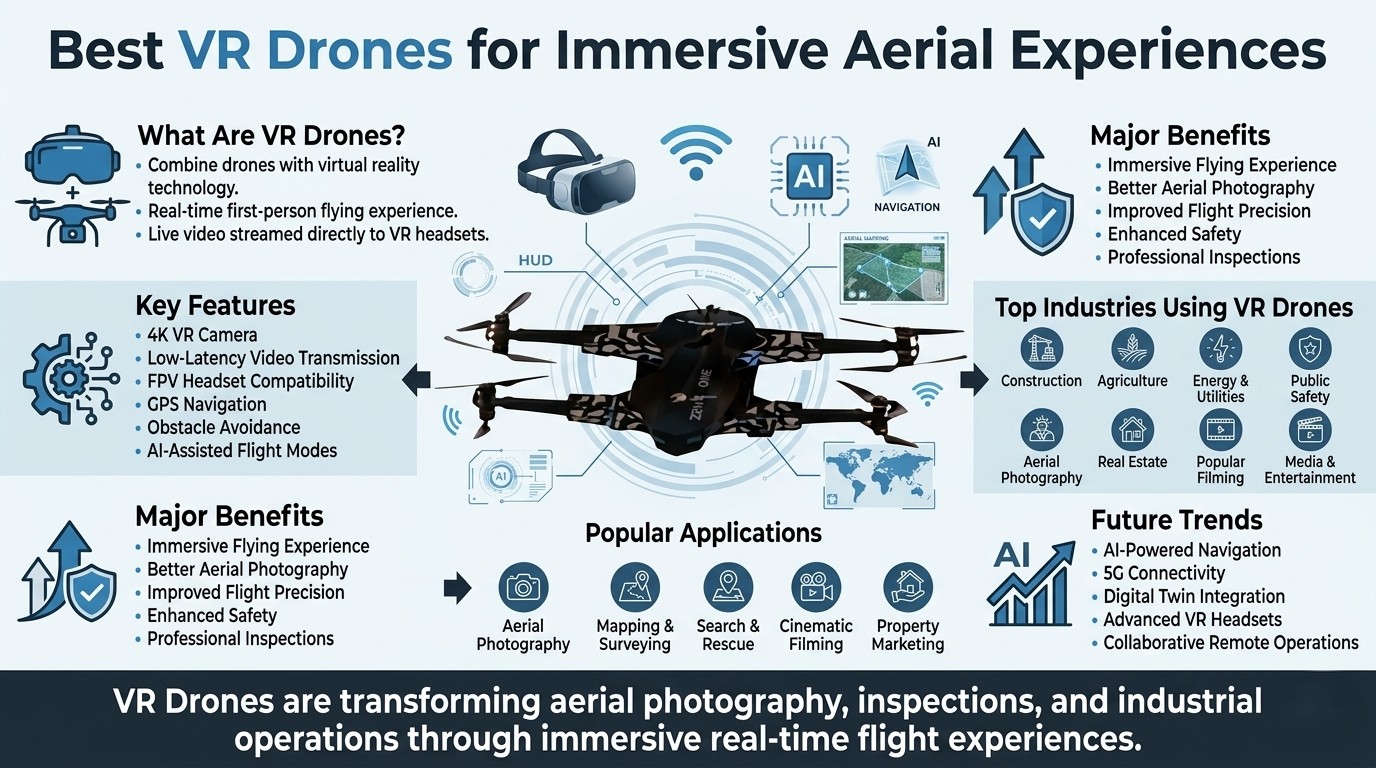
Key Features to Look for in the Best VR Drones
Selecting the right VR drone requires evaluating several important features. Not all models provide the same level of performance, image quality, or immersion.
High-Quality Camera Systems
A quality VR Drone Camera is essential for delivering a realistic viewing experience. Look for drones equipped with:
- 4K or higher resolution cameras
- Wide-angle lenses
- Stabilized gimbal systems
- HDR imaging capabilities
High-quality cameras ensure smoother visuals and greater detail during flight.
Low-Latency Video Transmission
Latency can significantly impact the VR experience. Delays between camera capture and headset display can create navigation challenges and reduce immersion.
Advanced transmission systems offer:
- Near real-time video feeds
- Stable connectivity
- Extended transmission range
VR Headset Compatibility
Not every drone supports virtual reality integration. Users should verify compatibility with:
- Dedicated FPV goggles
- Commercial VR headsets
- Mobile VR solutions
A reliable FPV Drone with VR Headset setup provides a seamless and immersive flying experience.
Intelligent Flight Features
Modern VR drones increasingly include automated flight technologies such as:
- Follow-me mode
- Waypoint navigation
- Return-to-home functionality
- Obstacle avoidance
These features enhance safety while simplifying operation.
Battery Performance
Flight duration remains a critical factor. Professional users often prioritize drones capable of delivering 30 minutes or more of flight time per battery cycle.
Build Quality and Reliability
Durable construction ensures dependable performance across varying weather conditions and operational environments.
For a detailed overview of current solutions and technologies shaping the market, many industry professionals explore resources such as Best VR Drones when evaluating available options and emerging innovations.
Benefits of Using a Virtual Reality Drone
VR drones offer several advantages compared to conventional drone systems.
More Immersive Flying Experience
The most obvious benefit is immersion. Users gain a realistic perspective that traditional screens cannot replicate.
Better Photography and Videography
Pilots can frame shots more accurately when viewing scenes directly through the drone’s camera system. This often results in improved composition and smoother footage.
Increased Operational Accuracy
Inspectors, surveyors, and industrial operators can identify details more effectively while maintaining precise control over drone positioning.
Enhanced Training Opportunities
VR drone systems can support pilot training by providing realistic flight experiences that improve situational awareness and navigation skills.
Improved Safety
The combination of immersive visuals and intelligent flight technologies helps operators maintain greater awareness of their surroundings and mission objectives.
Industries Benefiting from VR Drone Technology
Virtual reality drone technology is creating value across a wide range of industries.
Construction and Infrastructure
Construction firms use VR drones for:
- Site monitoring
- Progress tracking
- Structural inspections
- Safety assessments
The immersive perspective allows stakeholders to review projects remotely with greater accuracy.
Energy and Utilities
Utility companies deploy VR drones to inspect:
- Power lines
- Wind turbines
- Solar farms
- Transmission infrastructure
These inspections reduce operational risks while improving efficiency.
Agriculture
Farmers use drones equipped with advanced imaging systems to monitor crops, assess irrigation performance, and identify potential issues before they escalate.
Public Safety
Emergency response teams leverage VR drones for:
- Search and rescue missions
- Disaster assessment
- Fire monitoring
- Situational awareness
The real-time perspective helps teams make informed decisions during critical operations.
Media and Entertainment
Filmmakers increasingly use VR drones to capture dynamic aerial footage that would otherwise require helicopters or expensive equipment.
Real Estate
Property professionals utilize immersive aerial visuals to showcase properties, developments, and surrounding environments to prospective buyers.
Best Use Cases for VR Drones for Aerial Photography
Among all applications, aerial photography remains one of the most popular uses for VR-enabled drones.
Landscape Photography
VR Drones for Aerial Photography allow photographers to position cameras precisely while viewing compositions from a real-time aerial perspective.
Travel and Tourism Content
Content creators can capture stunning views of natural landmarks, historical sites, and tourist destinations with improved framing accuracy.
Commercial Marketing
Businesses increasingly use drone footage for promotional campaigns, advertisements, and brand storytelling.
Event Coverage
Large events, festivals, and sporting competitions benefit from immersive aerial coverage that provides unique visual perspectives.
Wildlife Observation
Photographers and researchers can observe wildlife from safe distances while maintaining detailed visual oversight.
Cinematic Production
Film producers use VR-enabled drones to create smooth aerial sequences and dramatic camera movements that enhance storytelling.
These applications continue to expand as drone cameras, stabilization systems, and VR technologies evolve.

Challenges and Limitations
Despite their advantages, VR drones are not without challenges.
Motion Sickness
Some users experience discomfort or motion sickness during prolonged VR sessions, particularly when flight movements are rapid or unpredictable.
Cost Considerations
High-quality VR drone systems often require:
- Advanced drones
- Specialized headsets
- Additional accessories
This can increase overall investment costs.
Regulatory Requirements
Drone operators must comply with local aviation regulations, which may limit certain operations or require certifications.
Connectivity Limitations
Video transmission quality can be affected by:
- Signal interference
- Environmental obstacles
- Distance from the aircraft
Maintaining stable connectivity remains essential for safe operation.
Learning Curve
New users may require time to become comfortable flying through a VR headset, especially when transitioning from traditional drone controls.
Future of VR and Drone Integration
The future of VR drone technology appears highly promising. Several emerging trends are expected to drive innovation in the coming years.
AI-Powered Navigation
Artificial intelligence will enable drones to make smarter flight decisions, identify obstacles automatically, and improve autonomous operation.
Improved Headset Technology
Next-generation VR headsets will likely feature:
- Higher resolutions
- Wider fields of view
- Reduced latency
- Enhanced comfort
These improvements will create even more immersive experiences.
Digital Twin Integration
Industrial organizations may combine VR drone data with digital twin environments, enabling remote inspections and real-time infrastructure visualization.
Enhanced Connectivity
Advancements in 5G and future communication networks will improve data transmission speed, supporting smoother video streaming and more responsive controls.
Collaborative Remote Operations
Multiple users may eventually share live drone perspectives simultaneously, supporting collaborative inspections, training, and decision-making.
As these technologies mature, VR drones are expected to become increasingly valuable across commercial, industrial, and recreational markets.
Conclusion
The Best VR Drones represent a significant advancement in both drone technology and immersive digital experiences. By combining real-time aerial perspectives with virtual reality viewing, these systems provide enhanced situational awareness, improved operational accuracy, and more engaging flight experiences.
From filmmaking and infrastructure inspections to agriculture and public safety, VR-enabled drones are delivering measurable benefits across numerous industries. While challenges such as cost, connectivity, and user adaptation remain, ongoing innovation continues to improve accessibility and performance.
As virtual reality hardware, artificial intelligence, and drone capabilities evolve together, the future of VR drone technology looks increasingly promising. Organizations and enthusiasts seeking deeper immersion, better aerial insights, and enhanced operational efficiency will continue to find value in adopting the Best VR Drones for both current and emerging applications.
FAQs
What are VR drones?
VR drones are drones that integrate virtual reality technology, allowing pilots to view live footage through a VR headset and experience flight from a first-person perspective.
How does a Virtual Reality Drone work?
A Virtual Reality Drone uses an onboard camera to capture real-time video and transmit it directly to a compatible VR headset, creating an immersive flying experience.
What is the difference between a standard drone and a VR drone?
A standard drone is typically controlled while viewing footage on a smartphone or controller screen, whereas a VR drone provides a real-time first-person view through a VR headset for greater immersion.
What is a VR Drone Camera?
A VR Drone Camera is the onboard camera that captures and streams live video to a VR headset. High-quality VR drone cameras often feature 4K resolution, image stabilization, and low-latency transmission.
Are FPV drones the same as VR drones?
Not exactly. FPV (First-Person View) drones transmit live video to goggles or displays. A FPV Drone with VR Headset combines FPV technology with virtual reality features to create a more immersive experience.
Can beginners use a Drone with VR Headset?
Yes. Many modern drones include beginner-friendly features such as GPS stabilization, obstacle avoidance, and automated flight modes that make learning easier.
What are the main benefits of VR drones for aerial photography?
VR Drones for Aerial Photography provide better framing, improved situational awareness, enhanced creativity, and more precise camera positioning for capturing stunning aerial images and videos.
Which industries use VR drone technology?
Industries such as construction, agriculture, energy, public safety, filmmaking, real estate, and infrastructure inspection are increasingly adopting VR drone technology.
Do VR drones require special headsets?
Most VR drones require compatible FPV goggles or VR headsets. Compatibility varies by manufacturer, so users should verify headset support before purchasing.
What features should I look for in the best VR drones?
Key features include a high-resolution camera, low-latency video transmission, VR headset compatibility, obstacle avoidance, GPS navigation, intelligent flight modes, and long battery life.
Are VR drones suitable for professional use?
Yes. Many professionals use VR drones for aerial photography, inspections, surveying, mapping, search and rescue operations, and cinematic content creation.
What is the future of VR drone technology?
The future of VR drones includes AI-powered navigation, improved VR headsets, enhanced connectivity through 5G networks, autonomous flight capabilities, and deeper integration with digital twin technologies.
Are VR drones safe to fly for extended periods?
Yes, VR drones can be safely operated for extended periods when pilots follow safety guidelines, maintain a strong video connection, monitor battery levels, and use features such as obstacle avoidance and return-to-home functionality. Regular breaks are also recommended to reduce eye strain and fatigue during VR headset use.